

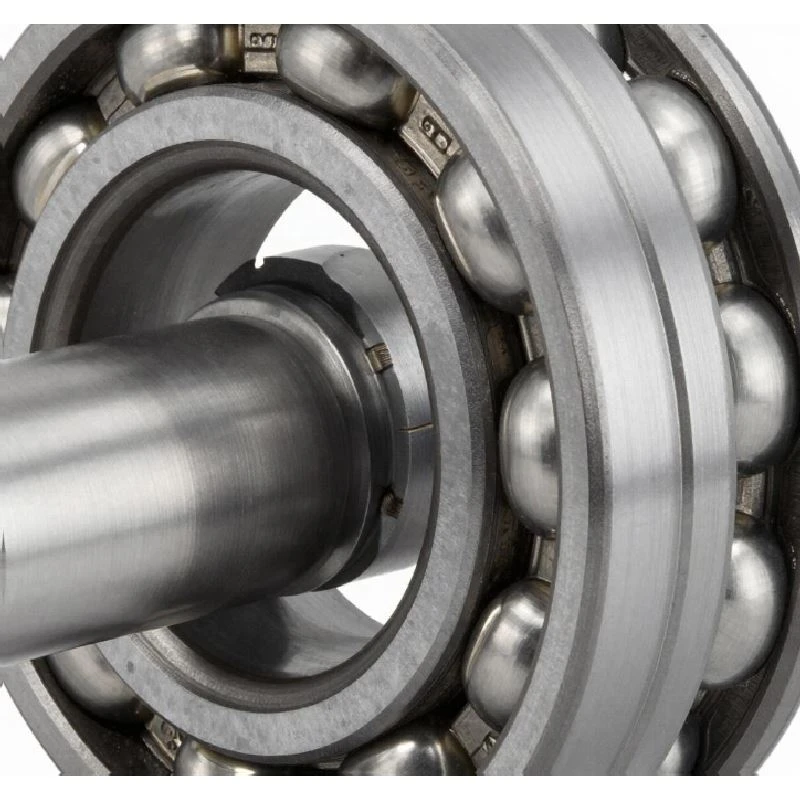
High Speed Thrust Ball Bearings are engineered for demanding industrial applications where axial load support, high rotational speeds, compact dimensions, and precise running accuracy must be optimized simultaneously. Designed primarily to handle axial loads in rotating assemblies, these bearings are critical components in machine tool spindles, high-speed pumps, turbocompressors, automotive transmissions, electric motors, and precision automation equipment.
High Speed Thrust Ball Bearing Selection Guide
Before finalizing bearing selection, evaluate the following operational parameters:
|
Selection Parameter |
Information Required |
Typical Specification / Range |
|
Bearing Type |
Single-direction or double-direction |
Single-direction (one-way axial) / Double-direction (bidirectional) |
|
Bore Diameter (d) |
Shaft diameter |
10 mm – 300 mm |
|
Outside Diameter (D) |
Available housing bore space |
24 mm – 420 mm |
|
Bearing Height (H) |
Available axial envelope space |
9 mm – 110 mm |
|
Axial Load (Fa) |
Continuous and peak axial load |
Up to 1,200 kN (Static C0a) |
|
Rotational Speed (n) |
Continuous and maximum operating RPM |
Up to 18,000 RPM (Oil lubrication) |
|
Load Direction |
Unidirectional or bidirectional |
One direction or both directions |
|
Lubrication Type |
Grease or oil circulation / mist |
ISO VG 32/46 Synthetic Oil or High-Speed Synthetic Grease |
|
Operating Temp. |
Normal running and peak temperatures |
-30 deg C to +120 deg C (Standard), up to +150 deg C (Heat-stabilized) |
|
Tolerance Class |
Required dimensional and running accuracy |
ISO P6, P5, or P4 (ABEC 3, ABEC 7) |
|
Clearance / Preload |
Axial internal clearance or preload requirement |
C0 (Standard), C2 (Tight), or custom axial preload |
|
Cage Design |
Retainer material and guidance method |
Machined Brass (M), Polyamide (TN9), or Pressed Steel (J) |
Application Suitability Matrix
|
Application Condition |
Suitability |
Critical Inspection Point |
|
Predominantly Axial Load |
Suitable |
Verify dynamic load rating (Ca) against required L10h service life. |
|
One-Direction Thrust |
Suitable |
Select Single-Direction Thrust Ball Bearing configuration. |
|
Two-Direction Thrust |
Suitable |
Select Double-Direction Thrust Ball Bearing configuration. |
|
High Rotational Speed |
Conditional |
Check cage centrifugal limit, oil lubrication flow, and thermal dissipation. |
|
Limited Axial Space |
Highly Suitable |
Compact section height allows low-profile mounting designs. |
|
Significant Radial Load |
Not Suitable |
Thrust ball bearings cannot sustain radial forces. Select Angular Contact Ball Bearings. |
|
Combined Radial & Axial Load |
Conditional |
Evaluate Angular Contact Ball Bearings (alpha = 40 deg) or Tapered Roller Bearings. |
|
Rapid Speed Fluctuations |
Conditional |
Select light Polyamide (TN9) cage to reduce ball skidding and inertia forces. |
|
Elevated Temperature (>120 deg C) |
Conditional |
Require heat-stabilized steel (S0/S1) and high-temp synthetic lubricants. |
Single-Direction vs. Double-Direction Configurations
Single-Direction Thrust Ball Bearings
Designed to accommodate axial loads acting in one direction only and locate a shaft axially in a single direction.
- Typical Uses: Unidirectional pump thrust shafts, vertical motor drives, machine tool positioning mechanisms.
- Component Assembly: Consists of a shaft washer with a ground bore fit, a housing washer with a relieved bore, and a guided ball-and-cage assembly.
Double-Direction Thrust Ball Bearings
Engineered to accommodate axial loads acting in both directions and locate the shaft axially in both directions.
- Typical Uses: Reversible transmissions, bidirectional actuators, dual-direction compressor shafts.
- Component Assembly: Features one central shaft washer, two housing washers, and two separate ball-and-cage assemblies.
High-Speed Performance Factors
Rotational Speed Limits: Operating capability is restricted by ball centrifugal forces, cage pocket friction, and frictional heat generation. Oil lubrication yields up to 30%–50% higher RPM capability compared to standard grease.
Axial Load & Minimum Loading: Excessively light loads at high RPM can cause ball skidding and raceway smearing. A minimum axial load (Fa_min) must be applied (typically calculated based on operating RPM).
Lubrication Strategy: High-speed applications require synthetic oils with optimum viscosity (typically ISO VG 32 or VG 46) or specialty grease featuring low-viscosity base oil and polyurea thickeners.
Thermal Balance: Frictional heat must be dissipated efficiently via housing design, cooling fins, or circulating oil systems to prevent thermal expansion and loss of running clearance.
Mounting Accuracy: Abutment shoulders on shafts and housings must remain perpendicular to the rotational axis within strict limits (ISO P5/P4 tolerance) to prevent uneven load distribution across the raceway.
Technical Product Range & Representative Specifications
Below is a representative sample of high-speed thrust ball bearing specifications (ISO Normal / P6 Class):
|
Bearing Model |
Bore (d) [mm] |
OD (D) [mm] |
Height (H) [mm] |
Dynamic Load Ca [kN] |
Static Load C0a [kN] |
Speed Limit (Grease) [RPM] |
Speed Limit (Oil) [RPM] |
Standard Cage Option |
|
51100 |
10 |
24 |
9 |
10.0 |
14.0 |
6,700 |
10,000 |
Polyamide (TN9) / Steel (J) |
|
51105 |
25 |
42 |
11 |
19.5 |
37.5 |
4,300 |
6,500 |
Polyamide (TN9) / Brass (M) |
|
51110 |
50 |
70 |
14 |
29.0 |
75.0 |
2,800 |
4,200 |
Machined Brass (M) |
|
51208 |
40 |
68 |
19 |
47.5 |
98.0 |
2,600 |
3,800 |
Machined Brass (M) |
|
51212 |
60 |
95 |
26 |
69.5 |
160.0 |
1,900 |
2,800 |
Machined Brass (M) |
Materials and Retainer Configurations
Premium Bearing Steel
- Standard Grade: High-carbon chromium bearing steel GCr15 (ISO 683-17 / SAE 52100 / DIN 100Cr6).
- Heat Treatment: Precision vacuum degassed and martensitic hardened to 60–64 HRC for maximum rolling fatigue resistance and dimensional stability up to 120 deg C.
Corrosion-Resistant Stainless Steel
- Material Grade: AISI 440C (DIN 1.4125 / X105CrMo17) martensitic stainless steel for corrosive or chemical-exposure environments.
- Performance: Hardness 58–60 HRC with high resistance to fresh water and organic acids.
Cage (Retainer) Options
- Machined Brass (M): Solid brass cage guided by balls or washers. Ideal for severe high-speed, high-vibration, and heavy shock-load environments.
- Glass-Fiber Reinforced Polyamide 66 (TN9): Lightweight retainer providing low friction, low noise, and minimal inertia forces at elevated RPMs. Temperature range: -40 deg C to +120 deg C.
- Pressed Steel (J): Standard ribbon-type pressed steel cage for general industrial use at moderate speeds.
Quality Control & Precision Inspection Protocols
Dimensional Verification: Bore (d), Outside Diameter (D), and Height (H) inspected via automated pneumatic air gauges and Coordinate Measuring Machines (CMM).
Raceway Surface Geometry: Surface roughness measured using profilometers to maintain Ra <= 0.10 um on precision-ground raceways.
Vibration & Running Noise: 100% online testing using vibration spectrum analyzers (S0910/BVT instruments) to screen for raceway defect frequencies.
Hardness & Metallurgical Inspection: Rockwell hardness testers (HRB/HRC) and metallographic microscopes ensure correct microstructural phase and case depth.
FAQ
Q: Can high speed thrust ball bearings handle radial loads?
A: No. Thrust ball bearings are designed strictly to carry axial loads. They cannot support radial forces. If your application involves combined radial and axial loads, you should consider angular contact ball bearings or tapered roller bearings.
Q: What cage material is recommended for high-speed applications?
A: For high RPM conditions, glass-fiber reinforced Polyamide 66 (TN9) or machined brass (M) cages are preferred. Polyamide cages are lightweight and reduce centrifugal forces and ball skidding, while machined brass cages offer high structural stability under heavy vibration and severe operating conditions.
Q: Why is minimum axial load necessary for high-speed operation?
A: If a thrust bearing operates at high speeds under insufficient axial load, centrifugal force causes the balls to slide or skid across the raceways rather than roll smoothly.
Q: How does oil lubrication compare to grease in high-speed thrust bearings?
A: Oil lubrication typically allows for 30% to 50% higher operational speeds than standard grease. Oil provides superior heat dissipation and lower viscous friction at high RPMs, whereas grease is better suited for low-to-moderate speed applications with simplified sealing requirements.
Q: What precision class should I select for machine tool spindle or high-speed pump applications?
A: For standard industrial equipment, ISO Normal or ISO P6 (ABEC 3) is sufficient. For high-speed precision equipment like machine tool spindles or high-accuracy positioning systems, select ISO P5 or ISO P4 (ABEC 7) tolerances to ensure minimal axial runout and low operational vibration.
Hot Tags: high speed thrust ball bearings, China high speed thrust ball bearings manufacturers, suppliers, factory, Thin Section Deep Groove Ball Bearings


