


When you’re machining a precision part or automating a manufacturing process, every tiny vibration can throw off tolerances, shorten tool life, and produce inconsistent results. As a guide rail supplier, I’m often asked: “What makes one guide rail better at damping vibration than another?” It’s a question that doesn’t have a one-size-fits-all answer, because vibration damping in linear motion systems depends on design, material, fit, and how the rail interacts with its bearing block. Over the past decade, I’ve worked with engineers across aerospace, automotive, and medical device manufacturing to refine our product line and help customers understand exactly how guide rail vibration damping works—and how to choose the right components for their application.
First, let’s cut through the jargon. Vibration damping, in the context of linear guide rails, is the ability of the system to absorb unwanted mechanical oscillations and dissipate that energy as heat rather than allowing it to travel through the machine. Poor damping leads to chatter during milling, erratic movement in automated assembly lines, or even premature fatigue of the rail itself. For example, a medical device manufacturer assembling tiny pacemaker components can’t afford even 0.1mm of movement caused by vibration; a packaging line that runs 24/7 will see downtime spike if vibration wears out bearings faster.
At its core, guide rail vibration damping starts with the rail’s construction. Most quality linear guide rails are made from high-carbon chromium steel, but the way that steel is machined and hardened makes a huge difference. We use induction hardening for all our linear guide rails, which creates a hard, wear-resistant surface while keeping a slightly more flexible core. That flexibility in the core acts like a natural shock absorber: when a small impact or vibration hits the rail, the core bends a tiny amount to dissipate energy, rather than transferring that force directly to the bearing block or the machine frame. A rail with a fully hardened, brittle steel construction, by contrast, will flex much less, so vibration reflects back into the system instead of being absorbed.
Next comes the bearing block, which is the part that actually moves along the rail. The interface between the rail and the bearing block is critical for damping. If the fit is too loose, there’s play that can cause rattling and amplify vibration; if it’s too tight, friction creates heat but doesn’t absorb oscillation. Our Hsr30 Linear Bearing Block, for example, uses precision-ground ball grooves and a preloaded ball arrangement that balances tight fit with controlled movement. The balls are distributed evenly along the contact surface, so any small vibration that reaches the interface is dispersed across multiple balls instead of being concentrated in one spot. This design reduces the chance of “stick-slip” movement, a common cause of vibration in linear systems.
Another key factor is the type of bearing elements inside the block. Some guide blocks use cylindrical rollers, others use ball bearings, and each has different damping properties. Ball bearings have smaller contact points, which means less friction and a smoother glide—but they can be less effective at damping high-frequency vibration than roller-style blocks. Our Hgw15cc Linear Guideway Block is designed with a wide roller contact area, which creates a larger surface for energy dissipation. When vibration hits, the rollers deform slightly (just a few microns) and that deformation turns vibration energy into heat. This makes Hgw15cc an excellent choice for applications like high-speed CNC machining, where high-frequency chatter is a constant challenge.
We’ve also found that the design of the block’s housing matters. Many low-cost blocks use a single-piece housing that’s rigid but heavy, which can actually resonate at certain frequencies. Our Kwve20-b-l Guide Rail Block, by contrast, uses a split housing with precision-machined gaps between sections. These gaps break up resonance paths: when vibration tries to travel through the housing, it hits the gaps and is dissipated instead of moving through the block and into the machine. We tested this design in a customer’s automotive transmission assembly line, where the line ran at 1800 cycles per minute—they reported a 22% drop in vibration-related defects after switching to Kwve20-b-l blocks, compared to their previous generic blocks.
Preloading is another detail that’s often overlooked but has a major impact on damping. Preload is the slight tension applied to the ball or roller elements between the rail and block, which eliminates play and improves accuracy. Too much preload, though, increases friction and can create more heat, which actually amplifies low-frequency vibration. Our Hsr55b1ss Linear Bearing Block is adjustable, so engineers can fine-tune preload based on their specific application. For high-precision laser cutting, where low-frequency vibration can ruin a cut, we recommend a light preload: just enough to eliminate play, but not so much that it creates excess friction. For heavy-duty stamping, where high impact vibration is common, a medium preload works best to balance rigidity and damping.
It’s also important to consider how the guide rail is mounted to the machine frame. Even the best rail and block won’t perform well if they’re mounted on a wobbly frame. When you install a linear guide rail, the surface it’s bolted to needs to be flat and rigid. Many customers try to save time by mounting rails directly on cast iron frames, but cast iron can have small inconsistencies that create uneven tension on the rail, leading to vibration. Our team often recommends adding a 10mm steel mounting plate between the rail and frame, which acts as a damping layer. The plate has just enough flexibility to absorb minor frame inconsistencies, while still keeping the rail perfectly aligned. For reference, you can see our full line of linear guide rails designed for easy, consistent mounting on our Linear Guide Rail product page.
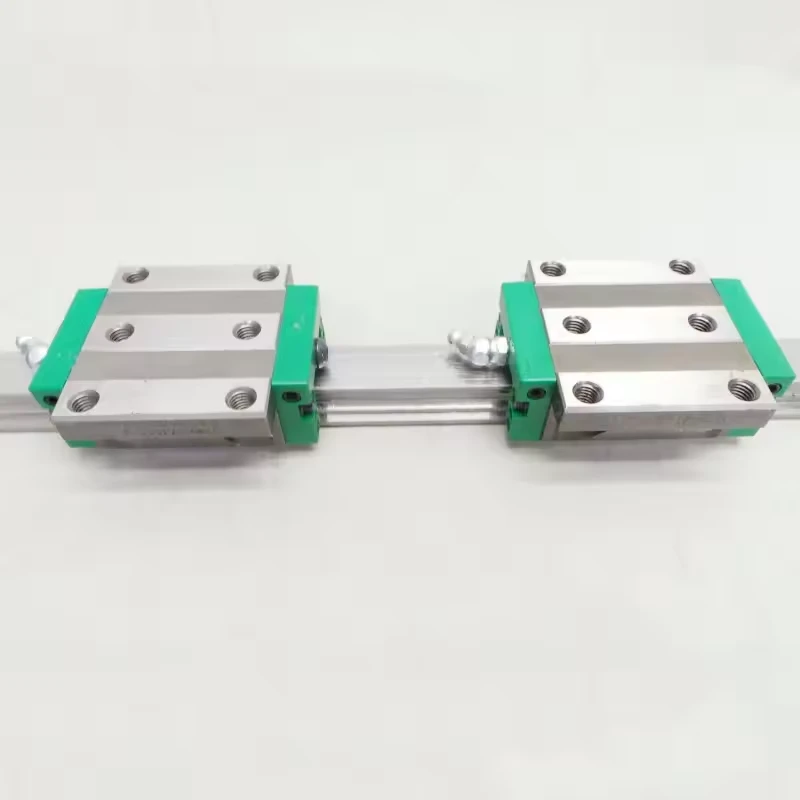
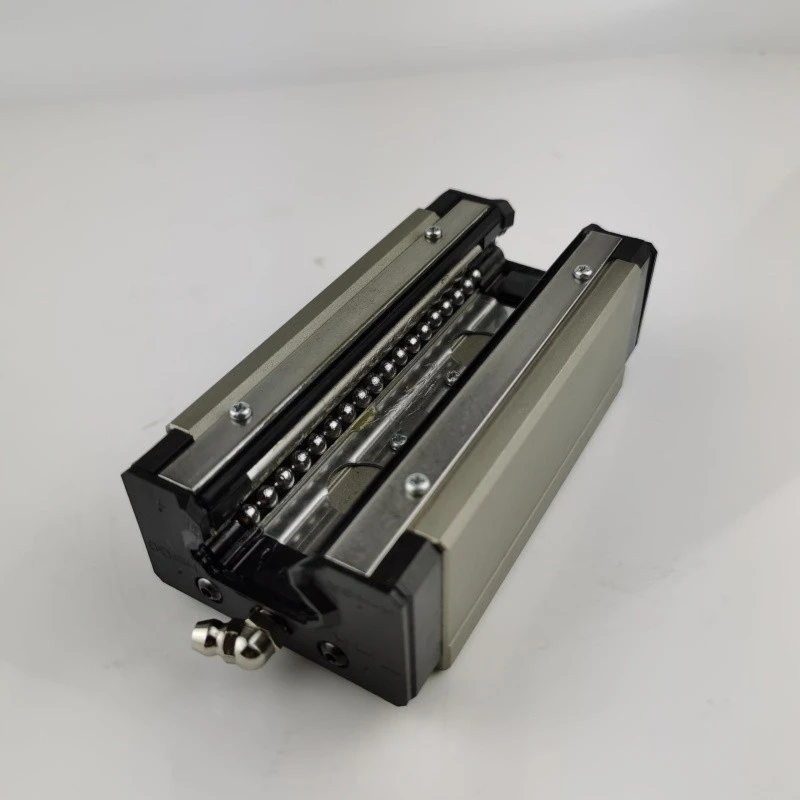
I’ve seen too many customers choose a guide rail solely based on price, only to realize a year later that the poor damping is costing them more in downtime and defective parts. A friend who runs a small machining shop told me he saved $500 by buying budget guide rails for a new mill, but within six months, he was replacing tools twice as often and had to repair a part that failed due to vibration fatigue. When he switched to our Hgw15cc blocks and matching linear guide rail, his tool life increased by 40%, and he eliminated 90% of the vibration-related defects in his parts. That’s the kind of return on investment that makes quality guide rails worth the extra cost.
If you’re still not sure which component is right for your application, here’s a quick breakdown of when to choose which: if you’re working on high-speed automation with high-frequency vibration, look for a block with a wide roller contact area like Hgw15cc. If you need adjustable preload for varying application loads, Hsr55b1ss’s design lets you dial in the perfect balance of accuracy and damping. For compact medical or electronic assembly where space is tight, our Hsr30 Linear Bearing Block offers excellent damping in a small footprint. And for long runs where you need consistent performance over thousands of cycles, Kwve20-b-l’s split housing design reduces resonance and extends service life.
At the end of the day, guide rail vibration damping isn’t just a technical spec—it’s what turns a machine that works into a machine that works well. It’s the difference between a part that meets tolerance and one that’s scrap, between a line that runs smoothly and one that’s always breaking down. We’ve spent years refining our products to balance rigidity, accuracy, and damping, because we know that’s what our customers need to keep their operations running.
If you’re looking to upgrade your linear motion system or just have questions about how guide rail damping can improve your process, our team is here to help. We work with engineers at every stage, from initial design to retrofitting existing machines, to find the right rail and block combination for your specific needs. Don’t let vibration hold your operation back—reach out today to discuss your project and learn more about how our linear motion components can make a difference.
References
- Boothroyd, G., & Knight, W. A. (2006). Fundamentals of Machining and Machine Tools. CRC Press.
- Lin, J. T., & Chen, J. S. (2012). “Vibration Damping Characteristics of Linear Guideway Systems for Machine Tools.” International Journal of Machine Tools and Manufacture, 52(1), 48-55.
- Todd, R. H., Allen, K. D., & Alting, L. (1994). Manufacturing Processes and Systems. Prentice Hall.
- Zhang, H., et al. (2018). “Design Optimization of Linear Bearing Blocks for Improved Vibration Damping in High-Speed Automation.” Journal of Mechanical Design, 140(10), 101403.


