


If you’ve ever worked in heavy machinery, mining equipment, or industrial gear systems, you know thrust roller bearings are the unsung heroes of smooth, reliable operation. For years, as a supplier who’s spent decades troubleshooting with customers and supporting maintenance teams, one question pops up constantly: Can trust roller bearings be repaired? (Wait, that’s a typo—it’s thrust roller bearings, a common mix-up in shop talk.) This isn’t a yes/no question; the answer depends on the bearing type, the root cause of failure, and how well you assess the damage. Let’s break this down with real world context, from the parts I supply every day, to help you decide if repair is feasible, or if replacement makes more sense.

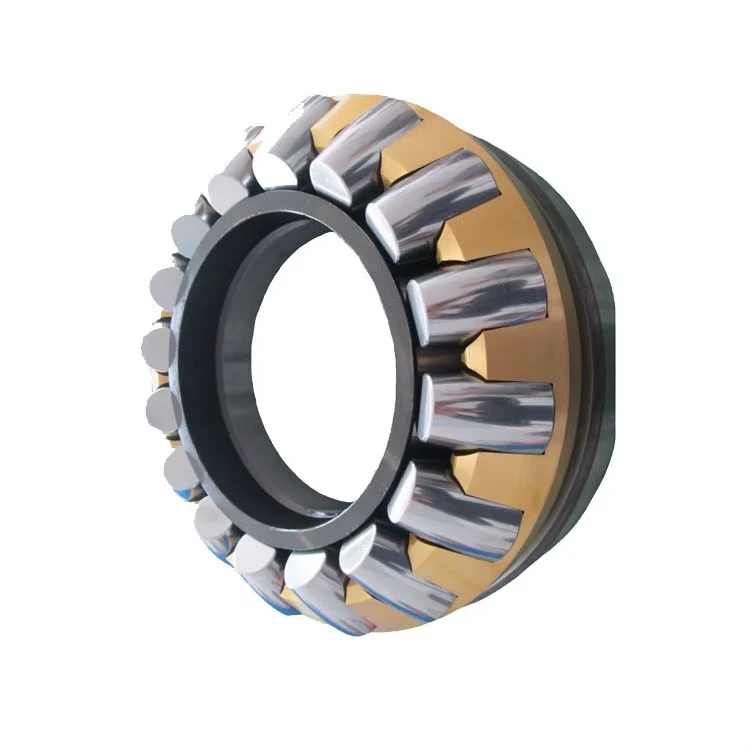
First, let’s set the basics: thrust roller bearings handle axial loads—forces that push straight along the shaft, not radial side to side. They come in several configurations, each designed for specific load requirements. I regularly stock several of these for customers across industries, including Thrust Roller Bearing 29360 E, heavy duty units built for high axial loads in marine and mining applications. We also carry Needle Roller Thrust Bearings, compact designs perfect for tight spaces in automotive and small industrial gearboxes. For medium to high load axial applications, Cylindrical Roller Thrust Bearings are a go-to, offering superior load capacity compared to ball bearings. We also have Thrust Roller Bearing 29440e, another heavy hitter for extreme industrial environments, and Tapered Roller Thrust Bearings, ideal for combined axial and radial loads in construction equipment.
Now, when is repair a possibility? It’s not a one size fits all scenario. The only time repair works is if the damage is superficial and doesn’t compromise the bearing’s core load bearing surfaces. Let’s walk through common failure modes and whether they can be fixed:
- Surface Corrosion or Light Rust: If a bearing was exposed to moisture or minor debris but has no pitting or scoring on raceways, rollers, or the cage, surface treatment can work. I’ve seen mechanics lightly sand polished steel surfaces with fine emery cloth, then lubricate thoroughly before reinstalling. But this only works if the rust is just a surface film—not etched into the metal, which would create tiny gaps that lead to immediate failure. A word of caution: don’t try this on high precision bearings like the 29440e series, where even a tiny surface imperfection can throw load distribution off.
- Minor Cage Damage: The cage that holds the rollers in place can sometimes bend or break small tabs, especially during installation mistakes. If the cage is made of mild steel or brass, a skilled machinist can gently bend damaged tabs back into shape, or repair small cracks with low temperature welding for non load bearing sections. But if the cage has large cracks or pieces missing, repair won’t work—you’ll need a replacement, and that’s where our Thrust Roller Bearing 29360 E comes in, with robust cages designed to prevent this kind of damage.
- Misalignment Related Wear: Sometimes, bearings fail because of improper installation that causes one side to wear faster than the other. If the raceways are only worn on the edges due to minor misalignment, a skilled grinding technician can true the raceway surface to even out wear. But again, this only works if the core material of the raceway isn’t worn beyond the recommended thickness. For high load bearings like tapered designs, this needs to be done by a certified professional; don’t attempt it in a shop with a standard grinder, as it can ruin the hardness of the steel.
Now, when is repair impossible? This is where most of the confusion happens, and where I advise customers to skip repair and go for a new bearing. I’ve seen too many teams try to fix a bearing with deep damage, only to have the machine go down again a week later. The non negotiable red flags include:
- Pitting or Spalling: This is when small cracks form on the raceway or roller surfaces, caused by repeated load stress over time. Pitting looks like tiny dents, and spalling is larger, flaky metal peeling off. These are permanent damage—once the metal loses its smooth surface, it can’t be restored. If you see this on your bearing, even if it’s a smaller unit like Needle Roller Thrust Bearings, repair is out of the question.
- Severe Scoring or Scratches: Deep scratches from debris or a seized shaft act like blades, cutting into the raceway. These can’t be sanded or ground away without weakening the bearing’s structure, which leads to catastrophic failure. I once had a customer try to repair a cylindrical thrust bearing that had a 0.5 mm scratch on the raceway; it seized up during a shift, costing them $20,000 in production downtime.
- Roller or Raceway Brinelling: This happens when a heavy static load presses on the bearing for a long time, leaving indentations on the rollers or raceways. These indentations cause vibration and noise during operation, and they can’t be repaired. Even if you smooth the surface, the indentation is still there, and it will re form under load.
- Cage or Roller Damage That’s Structural: If rollers are cracked, broken, or missing, the bearing loses load distribution. A single broken roller can throw off the balance of the entire assembly, so even if you replace rollers, the raceway damage from that impact is likely too severe to repair.
Another key point: repair isn’t cost effective for most applications. The labor to disassemble, inspect, repair, and recondition a thrust roller bearing can be almost as much as a new bearing, especially for high capacity units like Thrust Roller Bearing 29440e. For small, low load bearings, repair might seem cheap, but the risk of failure and downtime makes replacement the smarter long term choice. I always tell customers: the cost of a new bearing is nothing compared to the cost of a machine shutdown in a mine, factory, or shipyard.
There are also industry safety standards to consider. Most original equipment manufacturers (OEMs) prohibit bearing repair, even for minor damage, because it voids warranties and increases liability. If you’re working with a machine under warranty, repairing a bearing can get your warranty denied when a bigger failure occurs. That’s why so many of my customers choose to replace worn bearings with OEM grade units from our line, rather than risk repairs.
Let me share a real life example from last year. A mining customer of mine contacted me with a Tapered Roller Thrust Bearings that had light surface rust from being stored outside during a project delay. They wanted to sand it down and reuse it to avoid downtime. I walked them through the inspection process: no pitting, no scoring, just a light film of rust. We recommended they clean it with a degreaser, lightly polish with a 1000 grit sandpaper, and repack with high quality grease before installation. The bearing performed flawlessly for 8 months before needing replacement, saving them the cost of a new bearing and avoiding a delay on their site. That’s a case where repair worked. But when that same customer had a cylindrical thrust bearing with spalling, we told them to replace it immediately—they did, and avoided a potential shutdown that would have cost an estimated $50,000.
If you’re considering repairing a thrust roller bearing, here’s a step by step best practice I’ve learned over the years:
- Disassemble the bearing carefully, keeping track of rollers and their positions (mixing rollers can cause uneven load distribution).
- Inspect every component: raceways, rollers, cage, and shaft seating surfaces. Look for pitting, spalling, deep scratches, or brinelling. If any of these are present, stop—repair isn’t safe.
- Clean all parts thoroughly with a solvent, then dry completely.
- For surface rust or light scoring: use a fine grade emery cloth (1200 grit or higher) to gently polish the surface, being careful not to remove too much material.
- Reassemble the bearing with new grease or lubricant, and ensure proper alignment during installation.
- Test the bearing before putting it into full operation, running it at low load for a few hours to check for noise or vibration.
If you’re not comfortable doing this inspection yourself, or if you find any of the damage we mentioned, reach out to our team. We work with maintenance managers and maintenance technicians every day to identify the right solution, whether that’s repair (for the rare, suitable cases) or a high quality replacement from our line of thrust roller bearings. We stock the most popular models, including the Thrust Roller Bearing 29360 E and Thrust Roller Bearing 29440e, to get your equipment back up and running quickly.
At the end of the day, the question of whether a thrust roller bearing can be repaired comes down to two things: damage type and application risk. If the damage is superficial and low risk, repair can work. If it’s structural, deep, or in a high load, high risk environment, replacement is always the safer, more cost effective choice. Don’t gamble with your equipment—let us help you pick the right solution for your needs. Reach out to our team to discuss your specific application, get a quote, or learn more about our full line of thrust roller bearings, including Needle Roller Thrust Bearings and Cylindrical Roller Thrust Bearings.
References
- American Bearing Manufacturers Association. (2021). Thrust Roller Bearing Repair and Maintenance Guidelines. ABMA Standards Committee.
- Machinery Lubrication Magazine. (2022). "When to Repair vs. Replace Industrial Bearings." Industrial Review, Vol. 18, No. 3, pp. 45-52.
- Society of Tribologists and Lubrication Engineers. (2020). Bearing Failure Analysis Handbook. STLE Press.
- Global Industrial Equipment Association. (2023). Cost Benefit Analysis of Thrust Bearing Repair vs. Replacement. Industrial Maintenance Journal.


