


If you’ve ever spent time browsing for industrial bearings—whether you’re a maintenance tech at a small manufacturing shop, a supply chain coordinator for a construction company, or just someone who’s ever wondered what keeps conveyor belts or small machine parts moving—you’ve probably run across pillow block bearings. They’re those metal, block-shaped units with a round bearing inside, designed to mount onto flat surfaces and support rotating shafts. But if you’ve dug a little deeper, you might have noticed they come in two main types: single-row and double-row. I get questions about this all the time from customers, so I thought I’d break down the real differences, why they matter, and how to pick the right one for your setup. Let’s keep this casual, no stuffy jargon, just the stuff that actually helps you make a call.
First, let’s start with the basics you probably already know: a pillow block bearing (sometimes called a plummer block, though there’s a tiny difference I’ll get to later) is a pre-assembled unit, not just a loose bearing. It has a housing, a sealed or shielded bearing inside, and usually some mounting bolts to attach it to a base or machine frame. That pre-assembled design is why they’re so popular—you don’t have to hunt for a separate bearing and housing and figure out how to fit them; it’s one ready-to-install part. But the “row” part refers to how many rows of rolling elements (the balls or rollers that reduce friction) are inside the bearing. That’s the core of the difference.
Single-row pillow block bearings are the most common type you’ll run into. They have one set of balls inside, arranged in a single ring, and they’re designed to handle mostly radial load— that’s the force pushing outward from the shaft, like when a conveyor belt pulls to the side, or a fan blades push air and create sideways pressure. They’re pretty simple, compact, and affordable, which is why you’ll see them everywhere: in small conveyors, food processing equipment, light-duty pumps, even parts of farm machinery. For a lot of everyday applications, they’re more than enough. Let me use a real example: the P205 Pillow Block Bearing I sell is a single-row unit, and it’s a go-to for small conveyors in warehouses, or low-speed fans in HVAC setups. It’s light, easy to mount, and doesn’t break the bank, which is why it’s one of our bestsellers for light-use jobs.
Now, double-row pillow block bearings? They have two sets of rolling elements stacked next to each other, so they’re thicker and a bit bigger overall. And that extra set changes everything. First, they can handle more load—both radial load and axial load, which is force pushing along the shaft, like when a gear is pulling or pushing along its axis. Think of a conveyor that has a heavy load shifting back and forth, or a machine that uses a shaft to pull materials in and out; that axial force is something single-row bearings struggle with. Double-row units also have more contact between the rolling elements and the races, so they’re stiffer and more durable in heavier, high-vibration setups. If you’re working with a machine that’s running fast, has a ton of weight on the shaft, or deals with constant vibration (like construction equipment or large agricultural harvesters), a double-row pillow block is way better at holding up than a single-row.
Wait, let’s clarify a common mix-up here: not all pillow blocks are ball bearings. There’s also pillow block roller bearing units, which use cylindrical rollers instead of balls. Those are extra strong, made for super heavy loads, and they’re usually single-row? No, actually, some of the heavy-duty ones are double-row, depending on the application. But for the most part, when people talk about single vs double row, they’re referring to ball-bearing units, since those are the most widely used. Flanged ball bearing units, by the way, are a side note—they mount to a flange instead of a block, same row logic applies there: single for light, double for heavy.
Let’s talk about tradeoffs, because nothing’s perfect. Single-row is great for where space is tight, budget is a concern, and load is low. But if you accidentally use a single-row in a setup that needs axial load support, you’re going to run into problems fast. Like, say you mount a single-row on a conveyor that carries heavy boxes that slide back and forth as the belt moves—over time, the axial force will push the shaft out of alignment, wear out the bearing, and you’ll be doing a lot of unplanned maintenance. I’ve had customers come to me saying their Ucp207 Plummer Block Housing Unit (that’s a single-row heavy-duty single-row, by the way) kept failing on their large farm combine, only to find out they needed a double-row because the combine’s grain auger was putting constant axial force on the shaft. That’s a classic mix-up.
Double-row isn’t just stronger for load, either. They’re also more forgiving of minor shaft misalignment. No shaft is ever perfectly straight, right? Even when you install something correctly, there’s a tiny bit of give or misalignment. Double-row bearings can handle a little more of that than single-row, which means less premature wear. But they have downsides too: they’re bigger, heavier, and more expensive. If you’re in a tight space—like a small machine where every inch counts, or a low-budget project that doesn’t need the extra strength—splurging on a double-row is a waste. You’re paying for capacity you’ll never use, and you might not even have space to mount it.
Another thing to mention: housing material matters too, and that ties into both single and double row. Most of the pillow block bearings I sell are made of cast iron pillow block bearings, which are durable and resistant to impact, but some are plastic for light, low-vibration uses. Whether the housing is cast iron or something else, the row count of the bearing inside is still the main differentiator. But if you’re in a corrosive environment—like a food processing plant where there’s a lot of cleaning chemicals, or a marine setup where salt water is an issue—you might need a sealed bearing, which both single and double row can come with, just make sure you pick the right seal type.
Let me wrap this up with a quick guide to figuring out which you need. First, calculate your load: if your shaft is mostly only being pushed sideways (radial load) and the weight on it is less than, say, a few hundred pounds, go single-row. If you have axial load, heavy vibration, or the load is a few thousand pounds, go double-row. Second, check your space: measure where the bearing has to mount—single-row is slimmer, so it’ll fit in tighter spots. Double-row is thicker, so make sure you have room. Third, budget: single-row is cheaper for a reason, don’t overspend if you don’t have to.
I get it, it’s easy to overcomplicate this. When I first started selling bearings, I’d have customers come in asking for “a pillow block that works for everything” and I’d have to explain that there’s no such thing. Sometimes you grab a cheap single-row for a small conveyor in your garage, sometimes you need a tough double-row for a factory line that runs 24/7.

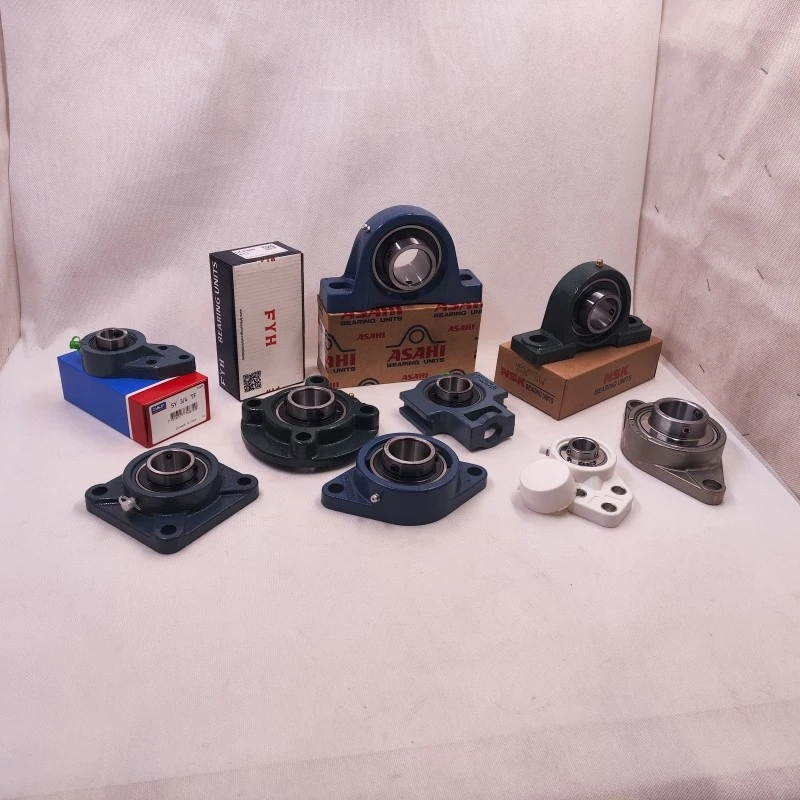
If you’re still not sure which one is right for your setup, don’t guess—hit us up. Whether you need a P205 for a light project, a heavy-duty Ucp207 for industrial use, or you’re curious about the difference between single and double row, we can walk you through what will work best for your application. We’re not just here to sell you a part, we’re here to make sure you get the right one so you don’t have to deal with unexpected breakdowns.
At the end of the day, the difference between single and double row pillow block bearings boils down to capacity and use case. Single is simple, cheap, and for everyday light jobs. Double is stronger, handles more load and axial force, and is built for tougher, higher-stakes setups. Don’t overthink it: if you’re working on something small and low-stress, stick with single-row. If it’s heavy, fast, or has any back-and-forth force, go double. And if you’re still unsure, reach out—we’re here to help you pick the right fit.
References
- SKF. (2024). Pillow Block Bearing Selection Guide. Retrieved from SKF Industry Portal
- NTN Corporation. (2023). Bearing Load Capacity: Single vs. Double Row Configurations. NTN Technical Library
- Timken. (2024). Pre-Assembled Bearing Units for Industrial Applications. Timken Engineering Resources
- American Bearing Manufacturers Association. (2023). Standard Definitions for Pillow Block Bearings. ABMA Technical Standards
- Machinery Lubrication Magazine. (2024). Common Bearing Selection Mistakes and How to Avoid Them. Endeavor Business Media


